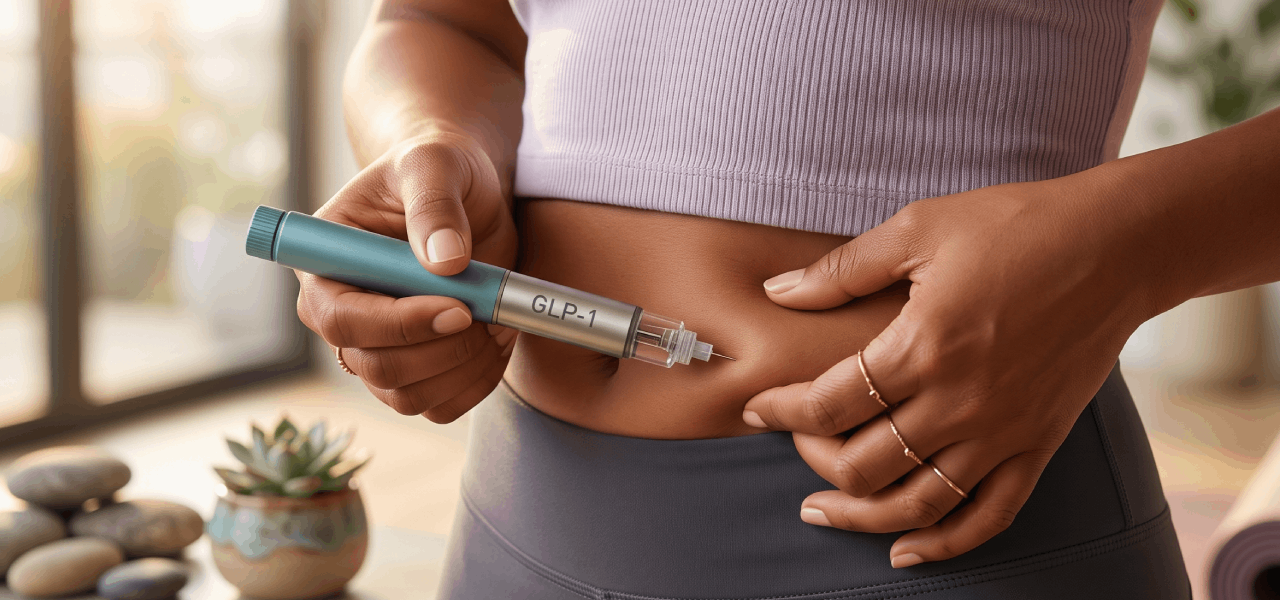
Australian guidelines now favor highly effective long-acting reversible contraception over the daily pill due to superior real-world success and increased affordability.
For decades, the pill has been treated as contraception's default setting. But Australian clinical guidance from the RACGP and RANZCOG now recommends long-acting reversible contraception - IUDs and implants - as first-line for most women, including younger women who haven't had children. The reason is straightforward: these methods are significantly more effective in real-world use, and recent Medicare changes have made them more accessible than ever.
If you live or work around Newstead, Fortitude Valley, Teneriffe or the Brisbane CBD, here's what the evidence actually says.
Every contraceptive method has a "perfect use" failure rate and a "typical use" one - and for the pill, the gap between them is significant.
Method
Typical-use effectiveness
Hormonal IUD
99.7–99.9%
Copper IUD
~99.5%
Implant (Implanon NXT)
~99.95%
Contraceptive pill
~91%
The pill's typical-use failure rate (7–9 pregnancies per 100 women per year) isn't a flaw in the medication - it reflects how hard it is to take a tablet at the same time, every single day, indefinitely (Australian Prescriber, 2025). IUDs and implants remove that daily dependency entirely: once inserted, they work continuously for 3–10 years without any action required from you.
Hormonal and copper IUDs are inserted through the cervix into the uterus in a short in-clinic procedure; implants are placed just under the skin of the upper arm using local anaesthetic. Australian guidelines recommend pain relief, local anaesthetic and a trauma-informed, unhurried approach as standard practice (RACGP LARC resources).
One of the most under-discussed benefits: hormonal IUDs are an evidence-based treatment for heavy menstrual bleeding, often reducing blood loss more effectively than oral medications, and can also ease period pain and some endometriosis-related symptoms (RANZCOG). If you've been living with heavy or painful periods and assumed that was just something to manage, it's worth a conversation — this may be a case where contraception and period relief are the same appointment.
As of late 2025, Medicare rebates for IUD and implant insertion and removal increased by up to 150%, aimed at cutting out-of-pocket costs by as much as $400 per procedure, alongside a bulk-billing incentive for these services (Department of Health and Aged Care, 2025). From 1 January 2026, PBS medicine costs are also capped at $25 per script. Device and procedure costs can still vary, which is exactly the kind of thing worth discussing directly with your GP rather than guessing.
At Next Practice Newstead, IUD and implant insertion and removal is provided in-clinic by Dr Marija Lugonja, whose focus areas include women's health, contraception and family planning. Dr Lugonja will talk through your health history, period patterns and future fertility plans to help you decide whether a hormonal IUD, copper IUD or implant is the right fit - no assumptions, no pressure.
Book a contraception consultation at Next Practice Newstead, on Wickham Street in Fortitude Valley, serving women across Newstead, Teneriffe, Bowen Hills, New Farm and the Brisbane CBD.
This article is general information only and isn't a substitute for individual medical advice. Your GP can advise on what's right for your specific health circumstances.
Australian Prescriber. (2025). Update on long- and short-acting contraceptive methods. australianprescriber.tg.org.au
RACGP. Intrauterine devices and systems: resources for general practice. racgp.org.au
RANZCOG. Long-acting reversible contraception guidance. ranzcog.edu.au
Australian Government Department of Health and Aged Care. (2025). Delivering better access to contraception for Australian women. health.gov.au
Systematic review. (2021). Safety and benefits of contraceptive implants. PMC8229462


.jpg)
.jpeg)
.jpg)